
Introduction
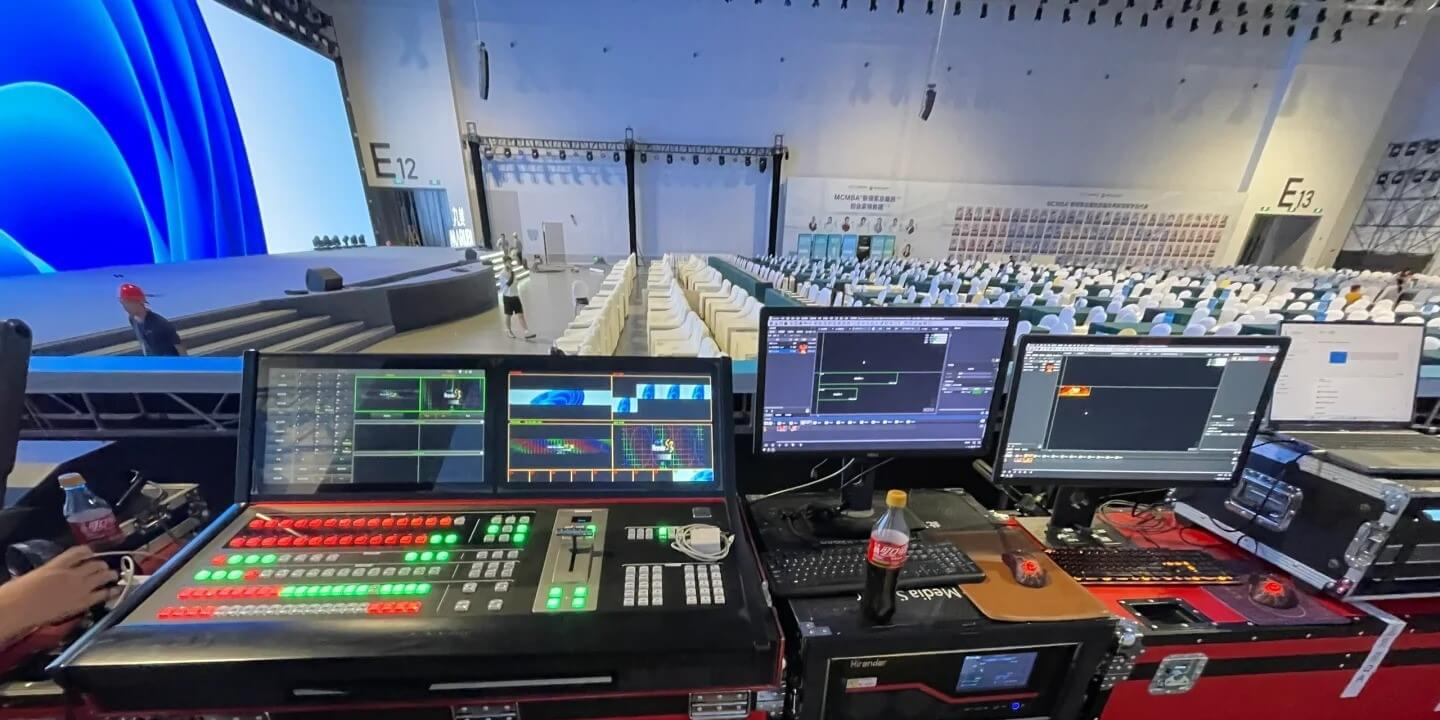
DMX may look mysterious to beginners, but in reality it is one of the simplest and most reliable control standards in the entertainment industry. Whether you're using moving heads, wash fixtures, PARs, strobes, or pixel bars, DMX is the language that tells every light what to do — color, brightness, movement, strobe rate, gobos, and more.
In 2026, DMX remains the foundation of professional lighting because it is:
- Stable
- Predictable
- Cross-brand compatible
- Scalable from 1 fixture to 512+ channels
If you're upgrading from Auto Mode or Sound Mode, learning DMX will immediately transform the quality of your shows. This guide explains DMX in plain English, using real use cases DJs and event operators deal with every day.

1. What DMX Actually Is (and What It’s Not)
DMX is simply a digital control signal that sends numbers from a controller (hardware console or software) to your fixtures.
Each fixture receives values from 0–255 on different “channels,” such as:
- Channel 1 → Pan
- Channel 2 → Tilt
- Channel 3 → Dimmer
- Channel 4 → Color
- Channel 5 → Gobo
- Channel 6 → Strobe
(Function depends on the fixture)
What DMX is NOT:
- It does NOT carry power
- It is NOT audio
- It is NOT brand specific
- It does NOT change brightness on its own — only by command
A simple way to visualize it:
DMX = MIDI for lights.
The controller sends instructions.
The light responds.
That’s all.
DMX Address: The One Concept You Must Understand
Every fixture needs a starting point — this is its DMX address.
Example:
A moving head in 16-channel mode:
→ Address = 001
→ It occupies channels 001–016
The next fixture must start at:
→ 017 (NOT 001 again)
Sometimes this is useful, but for beginners, it usually causes problems.
Common Address Issues:
- Wrong channel mode selected
- Incorrect channel spacing
- Controller not properly bound to the fixture
Correct setup: unique addresses= fixtures can be controlled independently
Intentional sync: shared address= fixtures move in sync
Accidental duplicate: chaotic confusion
Once you master addressing, about 80% of DMX confusion disappears.
DMX Channel Modes (8CH, 16CH, 20CH… What Do They Mean?)
Fixtures usually offer multiple DMX modes. This changes how many channels the light uses.
Example moving head:
- 8CH Mode → Basic control
- 16CH Mode → Adds fine pan/tilt + color/gobo variations
- 20–30CH Mode → Advanced pixel zones, macros, complex effects
Beginners often choose the highest mode and instantly get confused.
Professional approach:
| User Type | Recommended Mode | Why |
|---|---|---|
| Beginner DJs | Low CH mode | Easy, fast results |
| Mobile DJs | Medium CH | Creativity without overload |
| Stage & LD users | Full CH | Precision + full feature set |
This is why Betopper fixtures like BSW200, LM1915R, LB295 provide multiple DMX modes to fit different workflows.
DMX Universes: What Happens When 512 Channels Isn’t Enough
One DMX universe contains 512 channels.
Small setups rarely exceed this, but pixel bars, large stages, or multiple movers can quickly add up.
Example:
- 4 moving heads @ 20CH → 80 channels
- 6 PAR @ 7CH → 42 channels
- 2 strobes @ 12CH → 24 channels
Total = 146 channels → fits in one universe
If you exceed 512 channels, you must add:
- A second universe
- Or lower the channel mode
- Or use more capable software/hardware
For 90% of DJs, weddings, and small event setups:
One universe is enough.
DMX Cabling — The Rules That Prevent 90% of Problems
DMX uses RS-485 transmission.
It requires 120-ohm DMX cable, not microphone cable.
Why microphone cables fail:
- Wrong impedance
- Reflections
- Noise contamination
- Unstable data packet timing
Symptoms include:
- Random flashes
- Unexpected movement
- Strobe glitching
- Flickering
Correct daisy-chain wiring:
Controller → Light 1 → Light 2 → Light 3 → … → Terminator
Incorrect wiring:
Y-splitters, audio cables, star patterns, or multi-branch splits
→ All cause signal reflections and errors. DMX is designed to be a single linear chain.
The Terminator — The Most Misunderstood Essential
A terminator is a small plug with a 120Ω resistor inserted into a 3-pin or 5-pin XLR connector.
Its job:
- Absorb signal reflections
- Improve stability
- Prevent random flickering
- Ensure clean data at the end of the chain
For rigs longer than 10–15 meters, or with more than 4–5 fixtures chained together:
A terminator is mandatory.
If your light randomly strobe flashes or moves by itself → You probably need a terminator.
Wireless DMX in 2026 (What You Should Know)
Wireless DMX is incredibly convenient for mobile DJs and wedding setups.
But you MUST understand:
- Use stable 2.4GHz systems
- Keep receivers visible (line-of-sight)
- Avoid WiFi routers sitting next to DMX transmitters
- Never mix cheap wireless systems with pro units
If your wireless is unstable:
- Switch channels
- Reduce distance
- Avoid placing the transmitter directly on a metal stand
Even in 2026, wired DMX remains the most reliable — but wireless is excellent when used properly.
Basic DMX Programming (The Part Beginners Fear Most)
Programming DMX is simply controlling the order of:
- Color
- Dimmer
- Movement
- Gobos
- Strobe
- Positions
A basic professional scene includes:
1. Position preset
Where the light should point.
2. Color palette
Warm? Cool? High-energy?
3. Movement style
Fast sweeps? Slow rolls? Static focus?
4. Intensity
Bright for impact, low for ambience.
Beginners make the mistake of using everything at once.
Professional design requires restraint.
A Simple 2026 DMX Setup You Can Copy
Hardware:
- DMX controller or software
- DMX cables
- DMX terminator
Fixture Order:
Controller → Wash → Moving Head → Strobe → Terminator
Programming:
- Scene 1:Warm ambience
- Scene 2:Cool ambience
- Scene 3:Static gobo texture
- Scene 4:Slow movement
- Scene 5:High-energy movement
- Scene 6:Blackout
This is enough for a wedding, bar, DJ set, or corporate event.
FAQ— Practical, Beginner-Focused, Real Questions Customers Ask
1. Do I need a DMX controller, or can I run lights without one?
You can run lights in Auto or Sound mode, but DMX is the only way to control colors, movement, dimming, gobos, and timing with precision.
If you want your lights to look intentional — you need DMX.
2. Why does my DMX controller not affect the lights?
Common causes:
- Wrong DMX mode selected
- Wrong address
- Controller not patched correctly
- Bad cable
- No terminator in a long chain
Fixing the mode + address solves most issues instantly.
3. Which Betopper lights are ideal for learning DMX?
Our most beginner-friendly DMX fixtures include:
- BSW200 Hybrid — clear beam/spot/wash control
- LM1915R Wash — smooth color + easy programming
- LB295 Beam — clean DMX aerial looks
- LPC010-B High-CRI PAR — essential for photography-friendly scenes
Every model includes multiple DMX modes, so you can start simple and grow into more advanced control.
4. Is wireless DMX reliable?
Yes — if you use quality hardware, maintain line-of-sight, and avoid WiFi congestion.
For mission-critical events, wired DMX is still safest.
5. Do I really need a DMX terminator?
If your lights flicker, twitch, or behave unpredictably → yes.
A terminator stabilizes the end of your DMX chain and prevents data reflections.
Conclusion — DMX Is Easier Than You Think
Once you understand addresses, channel modes, and proper cabling, DMX becomes a powerful and predictable tool.
In 2026, whether you're a DJ, creator, bar owner, or event professional, DMX gives you:
- Cleaner looks
- Better control
- Higher reliability
- More professional shows
If you're ready to explore fixtures designed for DMX control, you can browse our full lineup here:
Your next lighting upgrade starts with understanding DMX — and now you do.

Laisser un commentaire
Tous les commentaires sont modérés avant d'être publiés.
Ce site est protégé par hCaptcha, et la Politique de confidentialité et les Conditions de service de hCaptcha s’appliquent.