
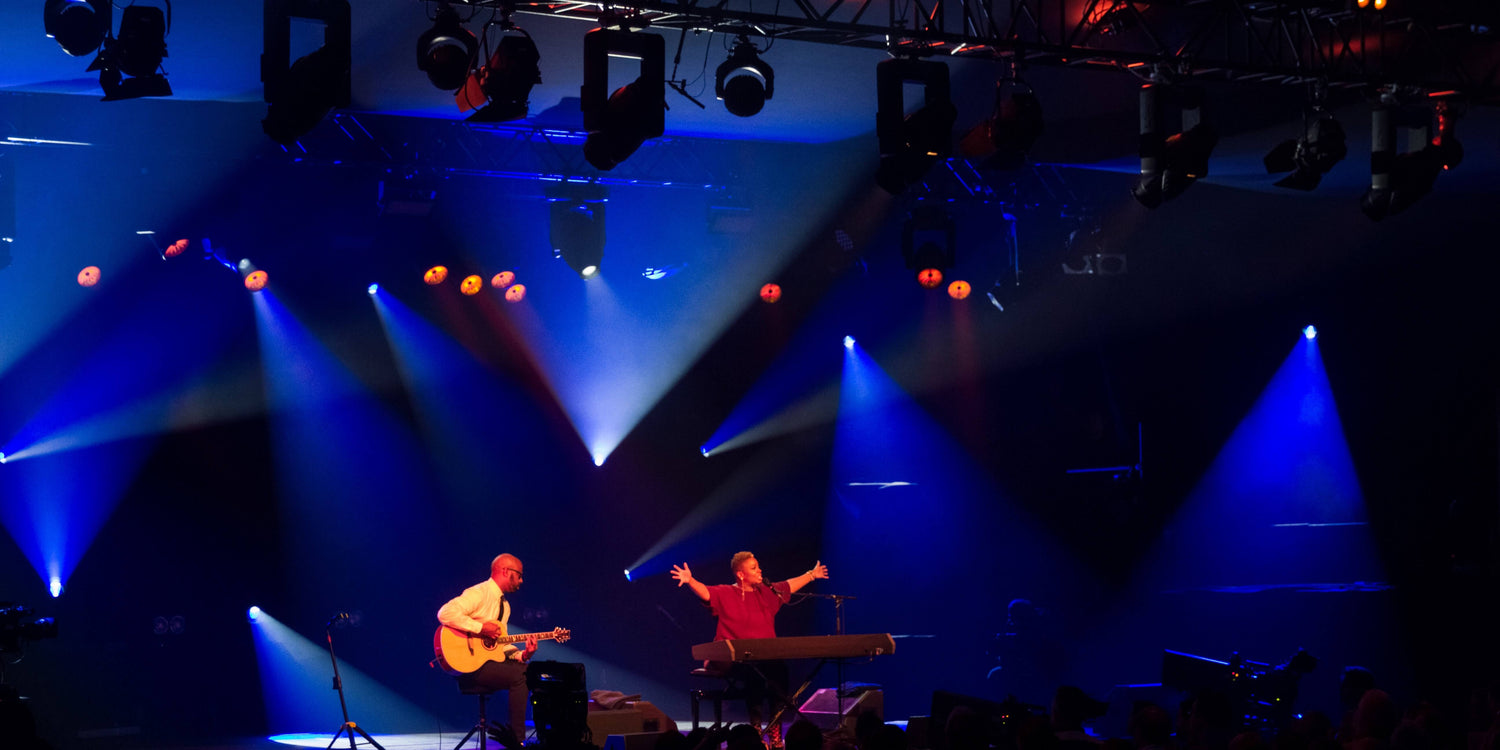
When club owners or operators start planning a lighting budget, their focus is usually very practical: how to buy lighting that is truly suitable for their club while spending as little money as possible.
With that question in mind, what should we actually be paying attention to? In real nightclub environments, lighting costs are rarely determined by the initial purchase price. Instead, they are defined by the following factors:
- How long the fixtures can last
- How long their performance remains stable
- How often they need to be repaired or replaced during normal operation
The key, then, is spending money in a way that is reasonable and aligned with the actual value of the fixtures.
This guide is written for nightclub operators, bar owners, and other venue managers, with the goal of explaining—clearly and practically—where nightclub lighting budgets should be spent and how to avoid paying twice for the same result.

How to Choose Lighting Fixtures Truly Suitable for Long-Term Nightclub Use
Choosing lighting for a nightclub is not about finding the brightest fixture or the longest feature list. From a budgeting perspective, the goal is far more practical:
selecting equipment that can operate reliably in a nightclub environment without forcing early replacement, frequent repairs, or unexpected downtime.
To make sound budget decisions, operators need to understand:
- which behaviors actually matter in real clubs
- which technical specifications deserve attention
- how to allocate budget effectively
- and how to evaluate long-term reliability before problems appear
Optical, Thermal, and Control Behaviors That Matter in Real Club Environments
Nightclub fixtures operate under conditions far more demanding than occasional events or temporary installations. Three categories of behavior have a direct impact on long-term cost.
1. Optical behavior
In nightclubs, optical performance is less about peak brightness and more about consistency over time.
- Multiple fixtures must match visually
- Output drift, color shifts, or uneven beams often force group replacement, not single-unit fixes
- From a budget standpoint, stable output over years is more valuable than maximum brightness on day one
2. Thermal behavior
Thermal performance is one of the most underestimated budget factors.
- Fixtures run for long hours in warm, enclosed spaces
- Poor heat management accelerates aging of LEDs, motors, and electronics
- Even when a fixture still works, thermal stress can shorten its usable life and reduce stability
In practice, heat management often determines when replacement becomes unavoidable.
3. Control behavior
Control stability directly affects both operation and cost.
- Nightclubs rely on constant DMX communication
- Delays, resets, or signal sensitivity cause disruptions during business hours
- Unstable control leads to troubleshooting, downtime, and unnecessary maintenance
Reliable control behavior reduces operational risk and long-term expense.
Which Technical Specifications and Features Are Worth Prioritizing in a Nightclub Lighting Budget
Not all specifications carry equal weight when budgeting for nightclub use.
Specifications worth prioritizing
- Sustained power ratings rather than peak output claims
- Mechanical design related to motors and movement systems
- Thermal management design and airflow paths
- Control architecture supporting stable, long-term DMX operation
These elements directly influence lifespan, stability, and maintenance frequency.
Specifications often overvalued
- Extremely high peak brightness with limited long-term relevance
- Complex effects rarely used in daily operation
- Feature density that increases complexity without improving durability
From a budget perspective, features that do not extend service life or reduce maintenance rarely justify additional cost.
Fixture Selection Strategies and Budget Allocation Tips
Effective nightclub budgeting is not about spreading money evenly—it is about aligning spending with operational risk.
- Primary areas (main dance floor):
- Highest heat, movement, and visual exposure
- Benefit most from fixtures designed for endurance and stability
- Secondary or decorative areas:
- Allow greater budget flexibility
- Lower operational stress reduces long-term risk
Another key strategy is avoiding feature overload. Selecting fixtures that match actual usage patterns helps control costs and prevents paying for capabilities that add little long-term value.
How to Evaluate Long-Term Fixture Reliability
Reliability cannot be judged by initial performance alone.
Useful evaluation approaches include:
- Assessing cooling capacity relative to output
- Favoring mechanical simplicity over unnecessary complexity
- Reviewing manufacturer transparency on operating conditions and duty cycles
- Observing consistency across multiple units, not just single samples
From a budgeting standpoint, reliability is not about eliminating wear—it is about ensuring wear happens predictably and within expected timeframes. Fixtures that age gradually and remain usable longer align far better with nightclub budgets than those that develop instability early.
How to Allocate a Nightclub Lighting Budget in Practice
Budget allocation is where theory turns into results. Once you understand that long-term stability matters more than short-term impact, the next step is deciding where money should be concentrated and where it can be controlled—without increasing long-term risk.
Start with Risk, Not with Fixture Count
A practical nightclub budget is not divided evenly across all lights. Instead, it is weighted toward areas with the highest operational risk:
- Primary dance floor: longest run times, highest heat load, constant movement, and the most visual scrutiny
- Secondary areas (bars, corridors, lounges): lower stress, fewer movement cues, less demand for absolute consistency
From a budgeting standpoint, this means the fixtures over the dance floor deserve the largest share of the budget. Spending slightly more here often prevents early instability that would otherwise force replacement across the entire rig.
Match Fixture Type to Actual Use
Different fixture types serve different budget roles in a nightclub.
- Beam and hybrid moving heads are typically used as visual anchors. They run frequently, move constantly, and define the club’s look. Allocating budget here toward fixtures designed for sustained operation reduces the risk of early mechanical or thermal fatigue.
- Wash and ambient fixtures often run for long periods with fewer movement changes. Here, consistency and thermal stability matter more than extreme output. Budget can be controlled by prioritizing durability over feature density.
For example, many operators choose hybrid fixtures such as the Betopper BSW200 for core dance-floor positions because they balance output, movement, and thermal stability in a single unit. In venues where strong, consistent aerial effects are central to the visual identity, higher-output beam fixtures like the Betopper LB295 are often allocated to key positions rather than spread thinly across the room.

These are not about buying the most powerful fixtures available—they are examples of aligning budget with operational stress.
Avoid Even Distribution
One of the most common budgeting mistakes is spreading funds evenly across all fixtures. This approach feels fair but ignores reality. A fixture operating under heavy load will age faster than one used sparingly. Allocating budget evenly often results in the most stressed fixtures failing first, forcing unplanned replacements.
A more efficient strategy is to:
- Invest more in high-stress zones
- Standardize fixture types within those zones to maintain consistency
- Accept simpler solutions in lower-stress areas
Leave Room for Longevity
A practical budget also leaves room for the future. Allocating funds with replacement cycles in mind—rather than assuming fixtures will last indefinitely—keeps long-term costs predictable and avoids emergency purchases.
For operators evaluating fixture categories, specifications, and layout options suited for different budget levels, detailed product information and configuration examples can be explored at:
https://betopperdj.com/
A well-allocated nightclub lighting budget is not about spending more. It is about spending intentionally, where it reduces risk, protects consistency, and preserves value over time.
FAQs About Nightclub Lighting Budget Decisions
1. Can event or rental lighting be used permanently in nightclubs?
In most cases, no. Event and rental fixtures are designed for short, intermittent use with cooling periods between shows. Nightclub lighting runs continuously under higher thermal and mechanical stress, which requires a different level of durability.
2. Is it a good idea to mix different brands or fixture types to save money?
Mixing can reduce upfront cost, but it often increases maintenance complexity and visual inconsistency over time. For long-term budgeting, using consistent fixture types usually results in lower operational cost.
3. Can I reduce budget by skipping certain features at the start and adding them later?
Sometimes. It is usually safer to delay optional visual features than to compromise on durability, thermal performance, or control stability. Features can often be added later, but reliability issues are much harder to fix after installation.
4. How can I tell if a fixture is designed for long-term nightclub use?
Look beyond feature lists. Focus on sustained operation capability, thermal design, mechanical simplicity, and control stability. Fixtures intended for nightclub use are typically designed to run for long hours without requiring frequent resets, cooling pauses, or maintenance.
5. What is the biggest sign that a lighting budget decision was wrong?
When fixtures require attention far earlier than expected. Frequent resets, inconsistent output, or repeated repairs within the first year are strong indicators that the fixture was not suitable for nightclub conditions.
Conclusion
A nightclub lighting budget is not about finding the cheapest fixtures—it is about avoiding unnecessary cost over time. In real club environments, long-term stability, predictable performance, and reduced maintenance matter far more than initial price or feature count.
Budgets work best when money is allocated based on usage intensity and operational risk, not evenly across all fixtures. Choosing lighting that matches how a nightclub actually operates helps prevent early replacement, lowers maintenance pressure, and keeps costs under control.
For operators evaluating fixtures designed for long-term nightclub use, detailed options and specifications can be found at:
https://betopperdj.com/


Laisser un commentaire
Tous les commentaires sont modérés avant d'être publiés.
Ce site est protégé par hCaptcha, et la Politique de confidentialité et les Conditions de service de hCaptcha s’appliquent.