
Introduction
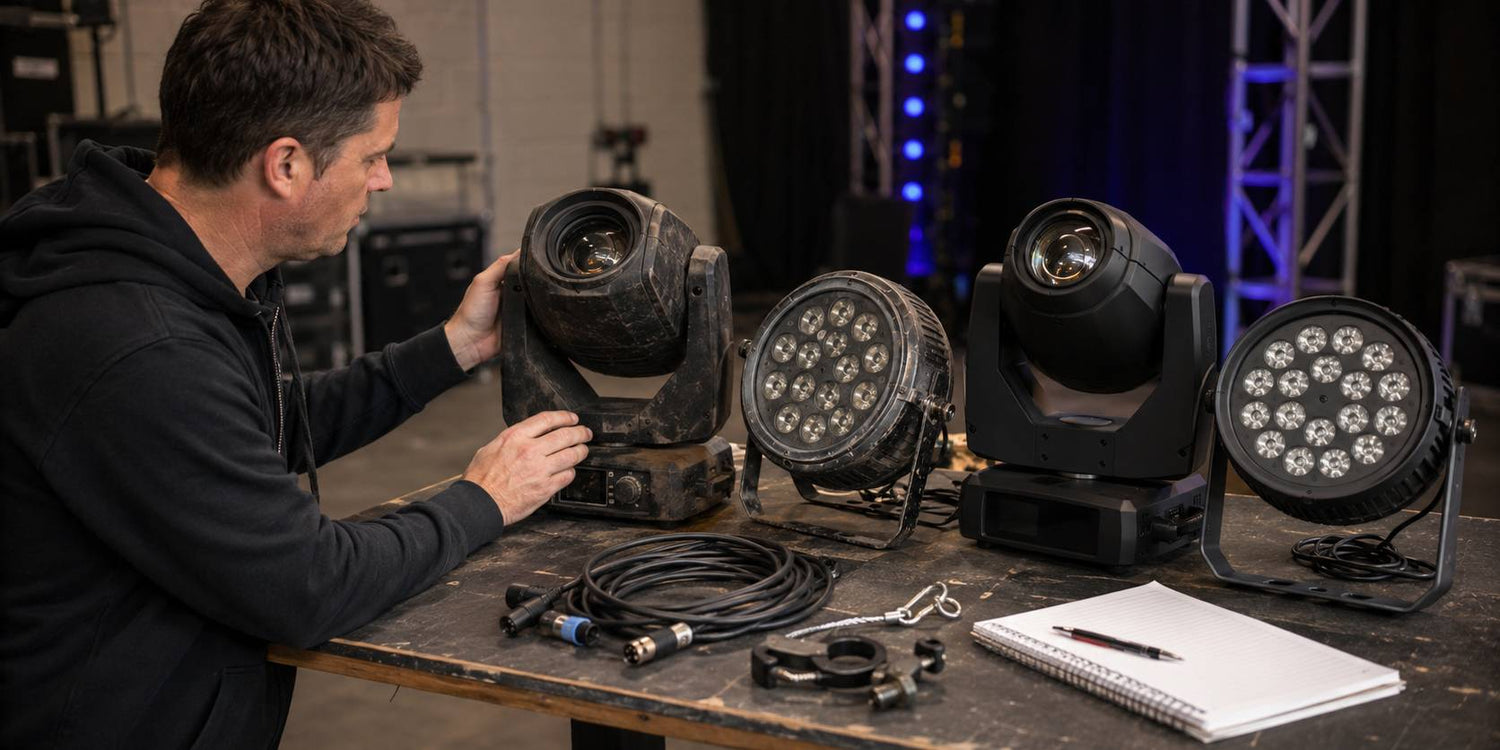
Used stage lights are often attractive because of their lower price compared to new fixtures. For home DJs, mobile DJs, and small venues, buying used can look like a practical way to build or expand a lighting setup without spending too much at once.
However, stage lighting equipment is not the same as typical consumer electronics. Many fixtures include LED engines, cooling fans, power supplies, motors, lenses, gobos, prisms, and DMX control systems. These components can age differently depending on how the fixture was used, stored, transported, and maintained.
A used light may power on and appear functional during a quick test, but that does not always show how it will behave during longer events, repeated setups, or continuous operation.
The real question is not only whether a used fixture is cheaper. It is whether the fixture is reliable enough for the way you plan to use it.
This guide explains what home DJs and small venues should check before buying used stage lights, when used equipment may still make sense, and when a new fixture may offer better long-term value.
1. Start With How You Will Use the Light
Before comparing used and new stage lights, start with one simple question: how will the fixture actually be used?
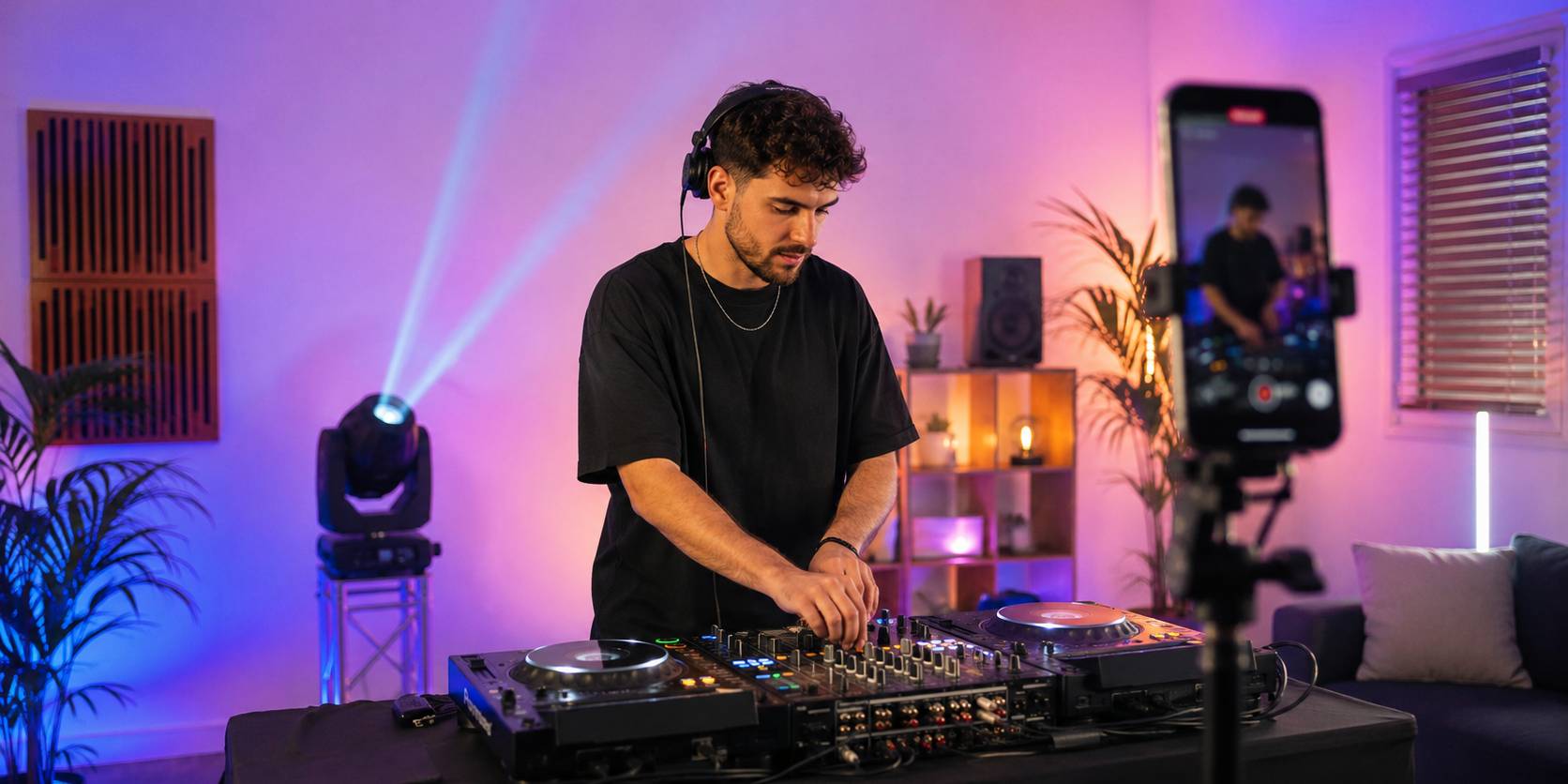
A light used for home practice does not need the same level of reliability as a fixture used for paid gigs, repeated events, or a fixed venue setup. If you are only experimenting with DMX control at home, testing different looks, or building a small personal setup, a used light may be acceptable if the condition is clear.
For paid events, mobile DJ work, bars, schools, community halls, or small venues, the standard is different. The fixture needs to power on consistently, respond correctly to control signals, and perform reliably throughout the event. In these situations, a light that “mostly works” during a short test may not be good enough.
Usage also affects how much hidden wear matters. A used moving head that has been transported frequently, operated in dusty rooms, or used for long events may have more stress on its fans, motors, lenses, and internal components than the outside appearance suggests.
So before asking whether a used light is cheaper, ask a more practical question:
What level of reliability does this setup require?
If the light is only for occasional practice, used equipment may be worth considering. If it will be part of a paid show, repeated venue setup, or long-term lighting system, a new fixture with predictable performance and warranty support may offer better value.
2. Look Beyond the Purchase Price
A used stage light may look like a bargain at first, but the purchase price is only part of the real cost.
Before buying, consider what may need to be replaced, repaired, or added later. Missing power cables, brackets, clamps, safety cables, manuals, or cases can quickly increase the actual cost of the fixture. Worn fans, weak LEDs, unstable power supplies, or damaged connectors may also require repair before the light is ready for regular use.
This is especially important when comparing a used fixture with a new one. A lower price does not always mean better value if you need to spend extra money on parts, repairs, accessories, or troubleshooting.
Before buying used, ask yourself:
- Are all required accessories included?
- Will I need to buy clamps, brackets, cables, or safety cables separately?
- Is the fixture still bright enough for my setup?
- Are replacement parts easy to find?
- Is there any warranty, return option, or technical support?
- If it fails, is the repair cost still worth the savings?
A used fixture can still be a smart purchase when the condition is clear and the missing costs are small. But if the real cost is uncertain, the lower price may not be as attractive as it first appears.
3. Check Brightness, Color, and LED Condition
One of the most important things to check is not simply whether the light turns on, but how it performs under real output conditions.
LED degradation does not always appear immediately. A fixture may light up during a quick test, but differences can become visible when compared with other units or used for a longer period.
Check for:
- Overall brightness consistency
- Color accuracy across RGB, RGBW, or RGBWA channels
- White balance stability
- Dead or dim LED pixels
- Flickering at low dimming levels
- Smooth dimming from low to full output
- Consistency when multiple units are used together
For home DJs and small venues, consistency is often more important than peak brightness. If several lights are used in the same room, mismatched output can make the entire setup look uneven.
This is where buying new can be especially helpful for wash and PAR fixtures. If you need a reliable color wash for small parties, DJ setups, school events, or venue lighting, a new LED PAR light gives you more predictable brightness and color consistency across multiple units.
For example, Betopper LPC1818 is suitable for users who want rich color wash effects with RGBWA+UV color mixing, while the Betopper LPC010-B series is a better direction for users who care more about cleaner event lighting and more natural front or area wash. Instead of guessing how much brightness a used PAR has lost, a new fixture gives you a clearer starting point for building a consistent setup.

4. Inspect Fans, Cooling, and Noise
Cooling performance is critical for stage lighting, especially when fixtures run for long periods.
Used lights may have reduced cooling efficiency because of dust buildup, worn fans, blocked vents, or previous use in smoky or dusty environments. Even if the light turns on normally, poor cooling can affect long-term stability.
Check for:
- Unusual fan noise or vibration
- Blocked air vents
- Heavy dust buildup
- Overheating after continuous operation
- Unexpected resets or shutdowns
- Burning smell or signs of heat damage
- Brightness reduction caused by thermal protection
A good test is to run the fixture continuously for at least 15–30 minutes. Some problems do not appear immediately but become obvious once the unit warms up.
This is especially important for moving heads, wash lights, and higher-output fixtures. If cooling is weak, the fixture may become unstable during longer events, even if it seems fine during a short test.
5. Test Motors, Movement, and Optical Effects
Moving heads, beam lights, and hybrid fixtures require more careful inspection than static PAR lights.
A PAR light mainly depends on LEDs, housing, cooling, and control. A moving head also depends on mechanical movement, motors, belts, gears, lenses, gobos, prisms, zoom, focus, and calibration. That means there are more parts that can wear out over time.
Check for:
- Smooth pan and tilt movement
- Accurate return to home position
- Shaking, stuttering, or mechanical noise
- Gobo wheel response
- Prism rotation and indexing
- Color wheel accuracy
- Zoom and focus consistency if available
- Stability of the yoke, base, and mounting points
Small movement problems may not seem serious at first, but they become more visible during live performance, especially when multiple moving heads are expected to move together.
If you are buying a moving head for paid gigs, repeated setups, or small venue use, buying new is often the safer choice. For example, Betopper LB150 is a compact beam option for users who want sharp beam effects, while Betopper LM0740 is more suitable for wash, zoom, and dynamic color movement. For users who want richer visual movement and layered wash effects, the Betopper LM1915R series can be a more controlled alternative to taking a risk on an unknown used moving head.
The point is not that used moving heads are always bad. The point is that their condition is harder to judge from photos or a short power-on test.

6. Check DMX Control and Fixture Modes
A fixture that powers on but cannot be controlled reliably is not useful in a real setup.
This is especially important if you plan to use the light with a DMX controller, lighting software, or multiple fixtures in the same system.
Check:
- DMX address configuration
- Channel response
- Dimmer, color, movement, and effect channels
- Auto mode
- Sound-active mode
- Master-slave mode
- Availability of a correct manual or channel chart
For DJs using DMX control, compatibility is just as important as physical condition. A used fixture without a manual or channel chart can become frustrating, especially if the channel mode is unclear or the fixture does not respond as expected.
New fixtures usually make this part easier because the product manual, DMX channel information, and support resources are easier to access. When building a system with several fixtures, this can save a lot of setup time.
7. Look for Missing Accessories and Support
The real cost of a used fixture often increases after purchase because of missing accessories.
Common missing items include:
- Power cables
- Mounting brackets
- Clamps
- Safety cables
- DMX cables
- Remote controls if supported
- User manuals
- DMX channel charts
- Replacement fuses
- Protective covers or cases
Not every new fixture includes every professional rigging accessory. Items such as clamps, safety cables, flight cases, and extra DMX cables may still need to be purchased separately depending on the product and setup. However, buying new usually gives you clearer information about what is included, what is optional, and what is compatible.
Support is also part of the value. If a used fixture has no warranty, no manual, no seller support, and no easy way to find parts, even a low price can become less attractive.
For users building a long-term setup, this is where a new Betopper fixture can be more practical. You are not only buying the light itself, but also clearer product information, current manuals, warranty support, and a more predictable ownership experience.
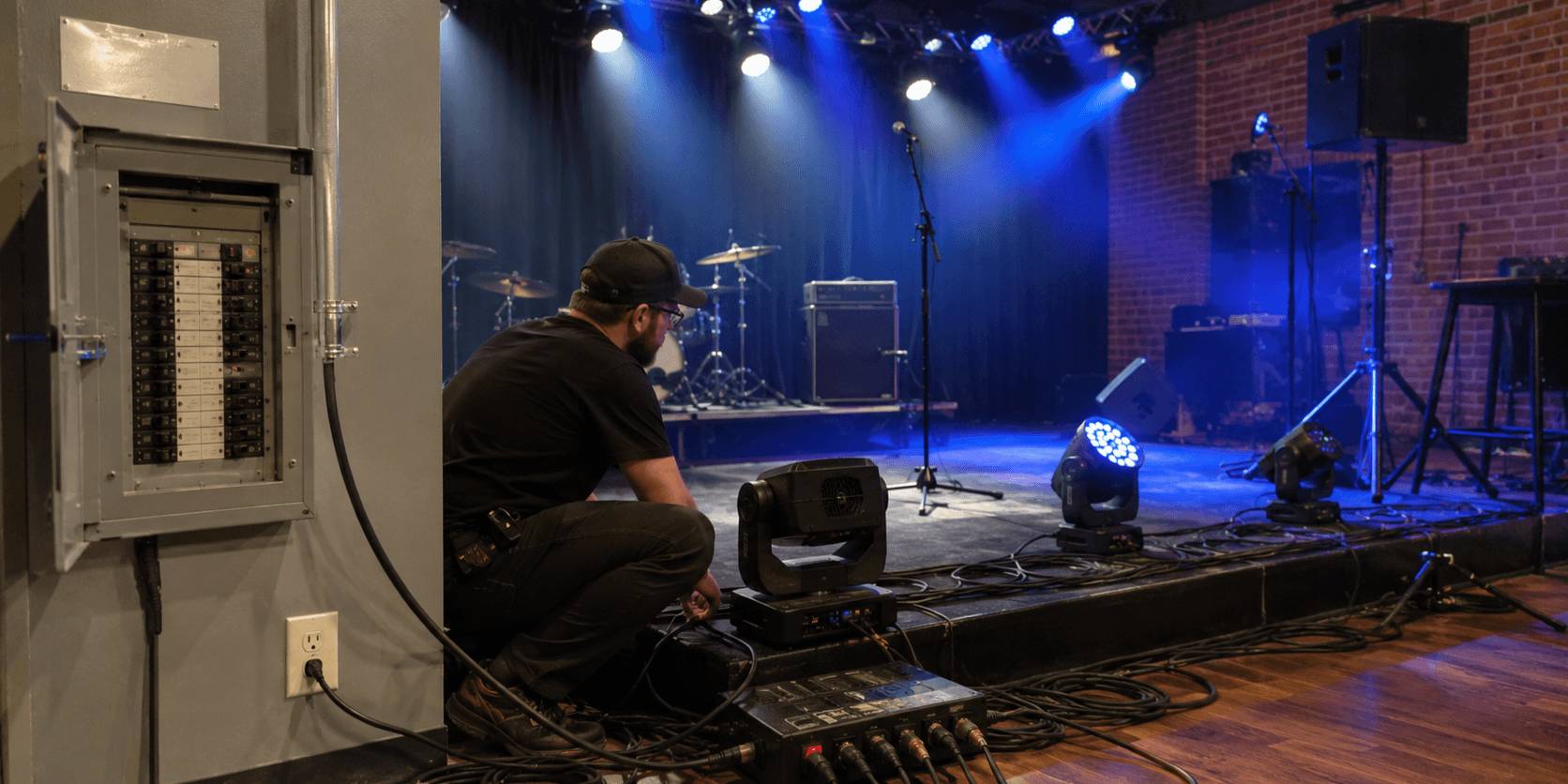
8. Safety and Power Condition Should Not Be Ignored
Physical and electrical condition should always be checked carefully before buying used stage lighting.
Inspect:
- Power cables and plugs
- Power input and output sockets
- Burn marks or overheating signs
- Loose connectors
- Cracked housing
- Damaged display or buttons
- Loose screws
- Mounting points
- Yoke and bracket stability
- Signs of corrosion or water damage
- Compatibility with local voltage standards
This is especially important if the fixture will be mounted above people, used in public venues, or transported regularly. Safety is not only about whether the light works. It is also about whether it can be installed and operated with confidence.
If you see signs of overheating, water damage, unstable mounting points, or damaged power connectors, it is usually better to avoid the fixture.
9. A Simple Buying Decision Framework
Instead of asking only “used or new,” evaluate the actual use case.
| Situation | Better Choice |
|---|---|
| Home practice or learning DMX | Used may be acceptable if tested |
| Occasional private use | Used may work if condition is clear |
| Paid DJ gigs | New is usually safer |
| Mobile events with transport | New is more predictable |
| Small venues or repeated setups | New offers better consistency |
| Multi-fixture systems | New makes matching output easier |
| Moving heads with motors, gobos, prisms, or zoom | New reduces mechanical risk |
| Missing manual, accessories, or support | New may be better value |
The more often the fixture is used in public, paid, or repeated environments, the more important reliability becomes.
10. Final Used Stage Light Check Before You Pay
Before buying a used fixture, run a full functional check instead of relying on photos or a short power-on test.
Use this checklist:
- Run the fixture continuously for 15–30 minutes
- Test all colors
- Test dimming from low to full output
- Check strobe function
- Verify DMX response
- Test auto and sound-active modes
- Check pan and tilt movement if it is a moving head
- Test gobo, prism, zoom, and focus if available
- Listen for fan noise
- Check heat buildup
- Inspect the power connection
- Confirm included accessories
- Inspect mounting points
- Ask about repair history
- Compare the final cost with a new fixture
If the seller cannot provide a working test, clear photos, accessory details, or basic product information, be careful.
A used light should not only be cheap. It should be understandable, testable, and suitable for your actual use.
Used vs New Stage Lights: FAQs
Are used stage lights worth buying?
Used stage lights can be worth buying for home practice, testing, or low-risk setups if the condition is clear and the price is low enough. For paid gigs, mobile events, or repeated venue use, new fixtures are often safer because they offer more predictable performance and support.
What should I check before buying a used stage light?
Check brightness, color consistency, dimming, fan noise, heat buildup, DMX response, movement accuracy, power connectors, accessories, and signs of damage. For moving heads, also test pan, tilt, gobos, prisms, zoom, and focus if available.
Is it risky to buy used moving head lights?
Used moving head lights can carry more risk than static PAR lights because they include motors, belts, gears, lenses, prisms, gobos, and cooling systems. These parts may wear over time and are harder to judge from photos or a short test.
Can I use used stage lights for paid DJ gigs?
You can, but only if the fixture has been fully tested and is reliable. For paid gigs, a light failure can affect the entire event, so new fixtures may be a better choice if you need consistency, warranty support, and easier setup.
Do used LED stage lights lose brightness over time?
Yes, LED fixtures can lose brightness over time depending on usage hours, heat, maintenance, and operating conditions. Color consistency can also change, especially when multiple used fixtures are combined in the same setup.
Should I buy used PAR lights or new PAR lights?
Used PAR lights may be acceptable if they are clean, bright, and consistent. However, if you need matching color wash across several units, new LED PAR lights are usually easier to manage because brightness, color output, and control modes are more predictable.
When is buying new stage lighting the better value?
Buying new is usually the better value when the fixture will be used for paid events, repeated setups, small venues, mobile DJ work, or long-term systems. New fixtures provide clearer product information, warranty support, and lower uncertainty compared with used equipment.
Final Advice: Buy the Value, Not Just the Price
Used stage lights can be a practical choice when the condition is clear, the risk is low, and the fixture is used for practice or occasional private setups.
But for paid events, mobile DJs, small venues, schools, community halls, and long-term lighting systems, stability matters more. A new LED fixture may cost more at first, but it can provide more predictable brightness, cleaner color consistency, current product information, warranty support, and easier integration into a growing setup.
The best decision is not based on price alone. It is based on whether the fixture can reliably support your real working environment.
If you are comparing used equipment with new lighting options, explore Betopper lighting solutions for home DJs, mobile DJs, small venues, and event setups:

コメントを残してください
全てのコメントは、掲載前にモデレートされます
このサイトはhCaptchaによって保護されており、hCaptchaプライバシーポリシーおよび利用規約が適用されます。