
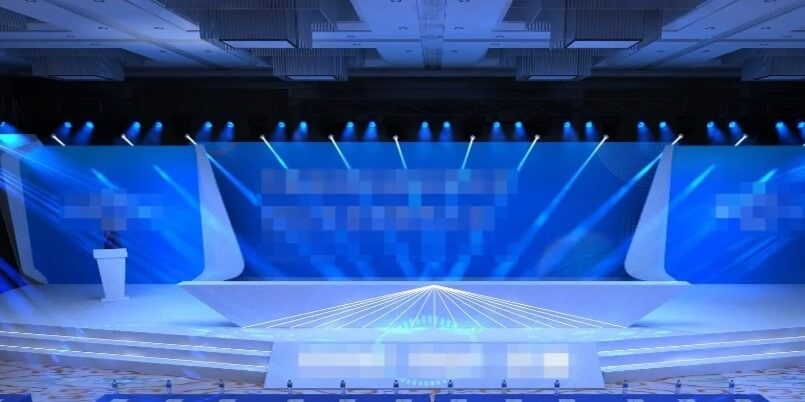
What to Upgrade Next — And What to Stop Buying
By 2026, most DJs, AV companies, and venues already own a lighting system.
The real question is no longer “Do I need lights?” — it’s:
“What should I upgrade next without wasting money?”
In wedding and corporate environments, lighting decisions are judged differently than they were a few years ago. Venues are brighter, décor is more complex, haze is often restricted, and clients evaluate results through photos and video long after the event ends.
As a result, many professionals find themselves in the same situation:
- They’ve added more fixtures
- They’ve spent more money
- But the overall look hasn’t improved the way they expected
This usually isn’t a fixture-quality problem.
It’s an upgrade-order problem.
This article focuses on one thing only:
helping you decide which category of lighting to upgrade next — and which purchases to stop making — based on real wedding and corporate use cases in 2026.
No theory.No trend-chasing.Just clear, practical upgrade decisions.

Step 1
If people look bad on camera, stop buying moving heads
Upgrade next: Static / high-CRI lighting
Stop buying: Beams, hybrids, FX fixtures
If any of the following are true:
- Faces look orange, green, or flat in photos
- The DJ disappears behind the booth
- Corporate videos look harsh or uneven
You don’t have a movement problem.
You have a front-light and color-accuracy problem.
In 2026, weddings and corporate events are judged after the event — through photos and recap videos.
If skin tones are wrong, movement doesn’t help. It actually makes the problem more visible.
At this stage, the most effective upgrade is dedicated, high-CRI static lighting used intentionally for people, not décor.
A fixture category example that solves this problem well is a high-CRI PAR or blinder-style light, such as Betopper LPC010-B (High-CRI PAR), which is designed specifically to stabilize skin tone and exposure on camera.
Buy only after this problem is solved.
Step 2
If the room feels flat, effects will not save it
Upgrade next: Wash lighting
Stop buying: FX lights “to add excitement”
Common symptoms at this stage:
- The space feels empty even with lights on
- Color coverage is uneven
- Décor and lighting fight each other
This is not an energy problem.It’s a space definition problem.
Wash lighting defines walls, ceilings, and background.
Without it, every other fixture looks disconnected, no matter how powerful it is.
In modern venues with architectural lighting and reflective décor, wash fixtures need to be controllable, smooth, and adaptable — not aggressive.
This is where a true wash mover (for example, a unit like LM1915R, designed for wide, even color coverage) becomes far more valuable than adding another effect light.
No wash foundation means no visual structure.
Everything else depends on it.
Step 3
Add movement only after the space looks correct
Upgrade next: Beam or hybrid moving heads
Stop buying: Beam-only rigs expecting constant aerial looks
Movement should solve one specific problem:
“Once the music energy rises, the show feels static.”
In 2026 venues:
- Haze is often limited or banned
- Fast, aggressive movement reads poorly on camera
- Slower, intentional motion looks more professional
This is where hybrid fixtures make sense.
They allow you to shift between wash-like coverage, spot textures, and controlled beam moments depending on the room and restrictions.
A hybrid Moving Head Light such as Betopper BSW200 fits this upgrade stage well because it adds motion and texture without forcing a beam-only look that may fail in haze-restricted environments.
Movement is an accent — not the base layer.
Step 4
FX and strobes are the last upgrade, not the first
Upgrade next: FX lighting only when everything else is clean
Stop buying: FX to compensate for weak fundamentals
FX lighting exists for:
- Drops
- Transitions
- Short highlight moments
If FX dominate the look, the show feels aggressive, chaotic, and unbalanced — especially in wedding and corporate environments.
If you are unsure whether you “need” FX, that is usually a sign that your base lighting still needs work.
FX amplify quality.
They do not create it.
The Correct Upgrade Order (2026 Reality)
If you already own lighting and want visible improvement, the order matters:
- High-CRI static lighting → fixes faces and photos
- Wash lighting → defines space and atmosphere
- Beam / hybrid movers → adds controlled motion
- FX / strobes → enhance specific moments
Skipping steps doesn’t save money.
It creates unused gear and upgrade regret.
One Question to Ask Before Any Purchase
Before buying anything new, ask:
“Which specific problem in my current setup does this fixture solve?”
If the answer is unclear, don’t buy it.
Final Thought
Upgrading lighting is not about chasing new fixtures.
It’s about fixing the weakest layer in your current system — in the right order.
If you’re planning your next upgrade and want to explore fixtures designed specifically for wedding, corporate, and professional event use, you can view the full Betopper lineup here:
Start with the category that solves your real problem — and build from there.

Lascia un commento
Nota che i commenti devono essere approvati prima di essere pubblicati.
Questo sito è protetto da hCaptcha e applica le Norme sulla privacy e i Termini di servizio di hCaptcha.