
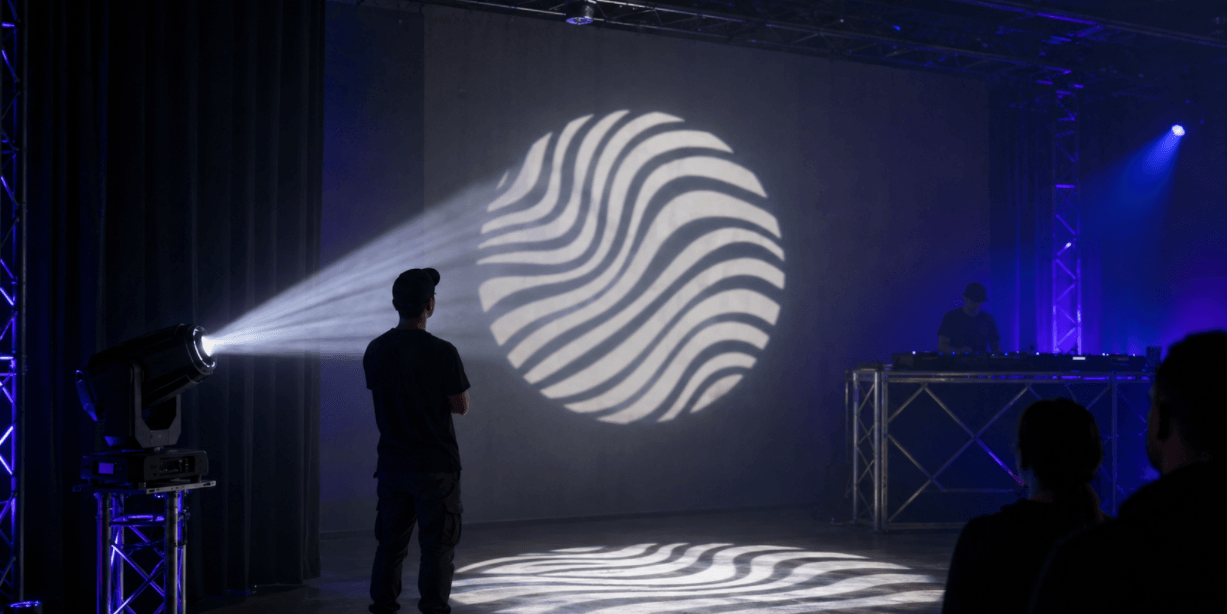
When comparing stage lights, you will often see terms like beam angle, zoom range, and focus in the product specifications. These terms are related, but they do not mean the same thing.
For DJs, churches, small venues, event teams, and lighting beginners, confusing these three terms can easily lead to the wrong fixture choice. A light with a narrow beam angle may look powerful in the air, but it may not cover enough space. A fixture with zoom may be more flexible, but zoom does not automatically mean the image will be sharp. Focus can make a gobo or spot look cleaner, but it does not replace zoom.
This guide explains the difference in a practical way, so you can better understand what each feature does and how it affects the final lighting look.

What Is Beam Angle?
Beam angle describes how wide or narrow the light output is.
A smaller beam angle creates a tighter and more concentrated beam. A larger beam angle spreads the light over a wider area.
In simple terms:
| Beam Angle | Visual Result | Common Use |
|---|---|---|
| Narrow angle | Tight, concentrated beam | Beam effects, aerial looks, long throw |
| Medium angle | Balanced spot or wash | Small stages, DJ setups, mixed use |
| Wide angle | Larger coverage | Wash lighting, wall wash, stage coverage |
A narrow beam is useful when you want strong lines through haze or a focused visual effect. A wide beam is better when you want to cover a wall, dance floor, band area, or stage background.
A common mistake is thinking that a narrower beam is always better. It is not. Narrow beams are more dramatic, but they cover less space. If you are lighting a small room, low ceiling, or wide performance area, a wider beam or wash effect may be more useful.
What Is Zoom Range?
Zoom range means the fixture can change its beam angle.
For example, if a fixture lists a beam angle of 2.5°–19°, it means the light can adjust from a very narrow beam to a wider output. This adjustable range is the zoom range.
Zoom gives the fixture more flexibility. You can use a narrow angle for sharp beam effects, then widen it for broader coverage or softer stage looks.
In practical use, zoom helps you adapt to different spaces:
| Situation | Useful Zoom Setting |
|---|---|
| Long throw or aerial beam | Narrow zoom |
| Small stage or DJ booth | Medium zoom |
| Wall wash or background color | Wider zoom |
| Build-up or transition effect | Gradual zoom change |
Zoom is especially useful for hybrid moving heads because they may need to work as beam, spot, or wash fixtures depending on the scene. A fixture such as the Betopper BSW200 can use zoom to shift between tighter beam looks and wider visual coverage, making it more flexible for small stages, event setups, and mobile productions.
However, zoom only changes the size or spread of the beam. It does not automatically make a gobo, edge, or projection sharper. That is where focus comes in.
What Is Focus?
Focus controls the sharpness of the projected image or beam edge.
If a fixture has gobos, patterns, or spot projection, focus helps make those details look clear. When focus is adjusted correctly, a gobo can look sharp on the floor, wall, or stage surface. When focus is not adjusted correctly, the image may look blurry or soft.
Focus is most important for:
- Gobo projection
- Spot effects
- Pattern projection
- Sharp beam edges
- Clear image effects on walls or floors
Focus does not make the beam wider or narrower. That is the job of zoom. Focus changes how sharp or soft the output appears.
For example, if you project a gobo onto a wall and it looks blurry, changing the zoom may only make the image bigger or smaller. To make the pattern clear, you need to adjust focus.
Beam Angle vs Zoom vs Focus
Here is the simplest way to understand the difference:
| Feature | What It Controls | What It Does Not Control |
|---|---|---|
| Beam angle | Width of the light output | Sharpness of image |
| Zoom | Adjustable beam width | Image clarity |
| Focus | Sharpness of image or edge | Beam size |
A fixed beam angle means the fixture has one main output angle. A zoom fixture can adjust between different angles. A focus function helps refine the sharpness of a projected image or beam edge.
These features often work together, but they solve different problems.
How They Affect Real Lighting Looks
For a beam look, beam angle matters most. A tighter beam creates a stronger aerial effect, especially with haze.
For a wash look, coverage matters more. A wider output helps fill a stage, wall, or background with color.
For gobo or spot looks, focus becomes important. Without proper focus, patterns may look unclear even if the fixture is bright.
For hybrid fixtures, all three features can matter. Beam angle and zoom define the size of the output, while focus helps control the clarity of spot and gobo effects.
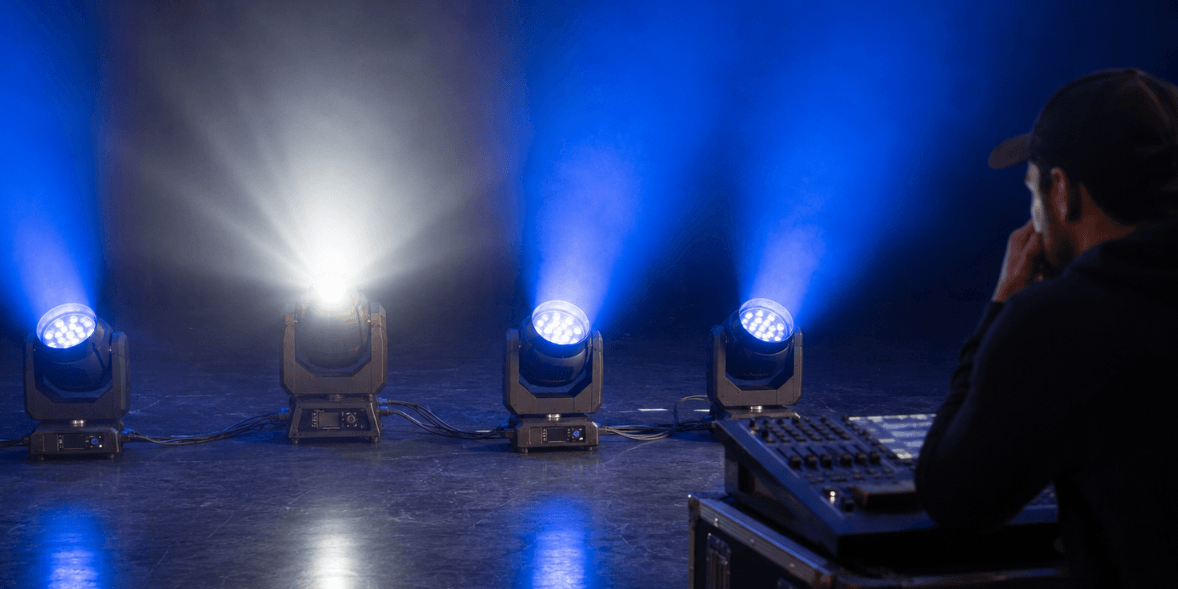
For wash moving heads, zoom is often used more for coverage and mood. A fixture such as the Betopper LM0740 is useful when you want RGBW wash movement with adjustable coverage. A narrower setting can create a more concentrated wash, while a wider setting can help cover more of the stage or background.
Which Feature Should You Care About Most?
The answer depends on how you plan to use the fixture.
If you want strong aerial beams, pay attention to the narrowest beam angle.
If you want flexible stage coverage, look for a useful zoom range.
If you want gobos or projected patterns, check whether the fixture has focus control.
If you need one fixture to handle several roles, a hybrid light with zoom and focus may be more useful than a fixed-angle fixture.
For small rooms, do not choose only by the narrowest beam angle. A very narrow beam may look impressive in product photos, but it may be too tight for practical coverage. For wider stages or background lighting, zoom range and wash coverage can be more important.
Common Misunderstandings
Zoom and focus are not the same.
Zoom changes the beam size. Focus changes sharpness.
A narrow beam is not always better.
It is better for beam effects, but not always better for coverage.
A wide beam is not weak.
It is designed to cover more area.
Beam angle is not the whole story.
Fixture brightness, optics, color mixing, movement, zoom, and focus all affect the final look.
Focus matters most when projecting details.
If there are no gobos or image effects, focus may be less important than beam angle or zoom.
Final Advice
Beam angle, zoom, and focus are three different parts of stage lighting control.
Beam angle tells you how wide or narrow the light output is. Zoom tells you whether that angle can be adjusted. Focus controls how sharp the projected image or beam edge appears.
Before choosing a fixture, think about the real use case. Do you need tight aerial beams, wider stage coverage, sharp gobos, or flexible all-in-one effects? The best choice is not always the fixture with the narrowest beam. It is the fixture whose beam angle, zoom range, and focus control match your venue, music style, and lighting goals.
To compare more stage lighting options for DJs, venues, events, and live performances, visit Betopper’s official website:
https://betopperdj.com/

Lascia un commento
Nota che i commenti devono essere approvati prima di essere pubblicati.
Questo sito è protetto da hCaptcha e applica le Norme sulla privacy e i Termini di servizio di hCaptcha.