


Introduction
Imagine setting up your lighting rig for an event, turning on your moving head lights, and realizing the effect looks completely different from what you expected. The beams may be too narrow to cover the stage, the patterns may look blurry, or the light simply doesn’t create the dramatic atmosphere you had in mind.
In many cases, the issue comes down to one overlooked specification: beam angle.
The beam angle determines how wide or concentrated a light output is, which directly affects whether a fixture produces sharp aerial beams, detailed projections, or wide stage coverage. This is why moving head lights are usually categorized into Beam, Spot, and Wash types—each designed for a different lighting purpose.
In this guide, we’ll explain what beam angle means in stage lighting, compare the visual effects of Beam, Spot, and Wash moving heads, and help you understand which type works best for different stage and event setups.

What Is Beam Angle?
In stage lighting, the beam angle describes how wide the light spreads after leaving the fixture. It is measured in degrees (°) and represents the angle between the two points where the light intensity drops to about 50% of its maximum brightness.
In simple terms, the beam angle determines how concentrated or how wide the light output appears. A smaller angle produces a tighter and more focused beam, while a larger angle spreads the light across a wider area.
For example, a fixture with a 5° beam angle will create a sharp, pencil-like beam that travels a long distance and remains clearly visible in haze. By contrast, a light with a 40° beam angle spreads its output broadly, making it suitable for illuminating stages, performers, or backdrops.
Understanding beam angle is essential when choosing moving head lights because it directly affects the visual style of your lighting design—whether you want dramatic aerial beams, precise projections, or smooth stage coverage.
Comparing the Three Types of Moving Head Lights
Most moving head fixtures fall into three main categories based on their optical design and beam angle: Beam, Spot, and Wash. While their beam angles may overlap in some cases, their visual texture, projection capability, and stage function are very different.
Understanding these differences is essential when designing a lighting setup, because each type plays a distinct role in creating depth, movement, and stage coverage.
Narrow Beam Lights (Beam) — 2.5°–8°
Beam moving heads are designed to produce extremely tight, high-intensity light rays, typically between 2.5° and 8°.
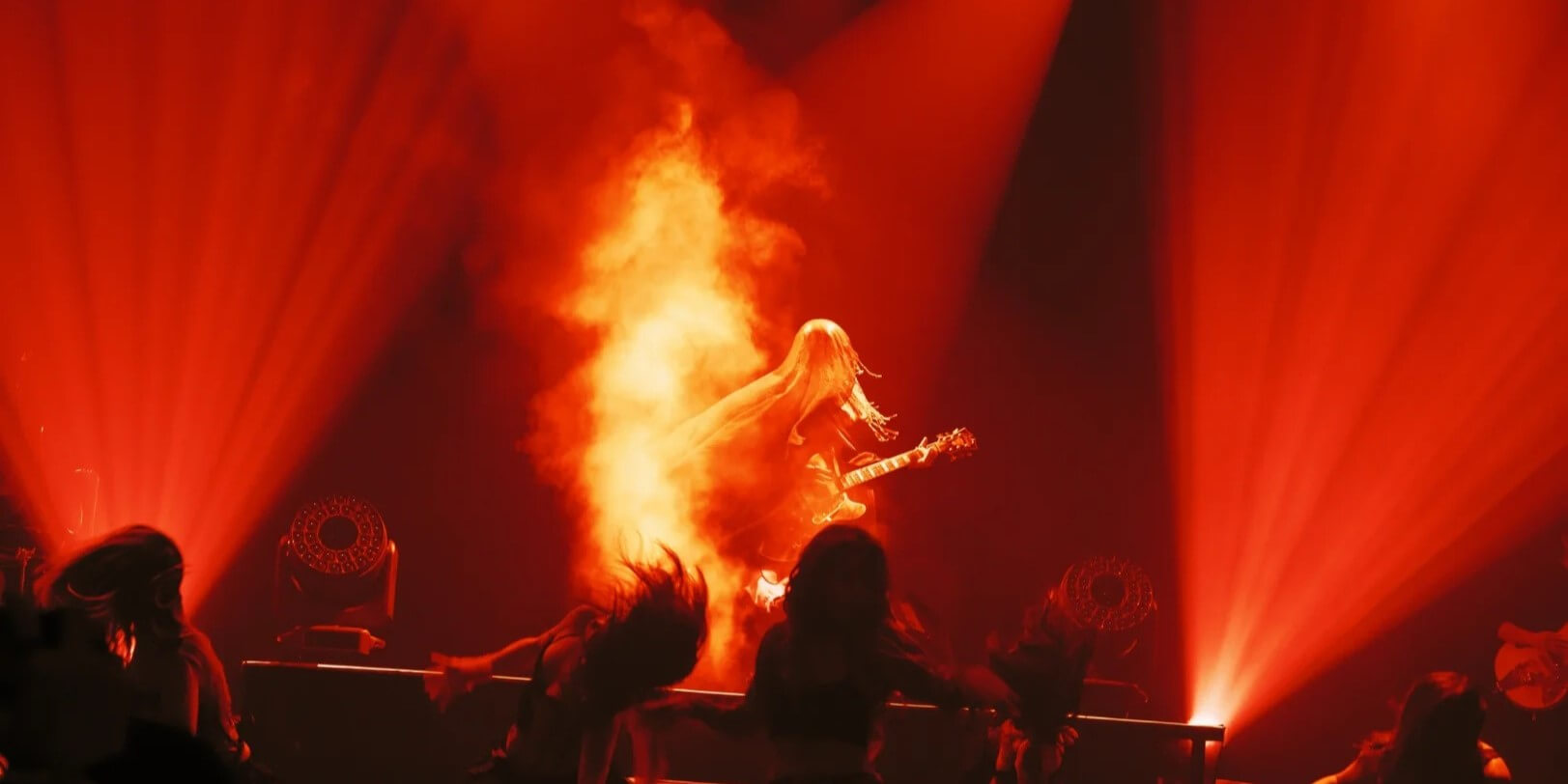
The narrow angle concentrates most of the light energy into a small column, allowing the beam to remain visible over long distances—especially in haze or smoke. This is why beam fixtures are widely used in concerts, festivals, and nightclubs to create the iconic aerial light effects sweeping across the venue.
Because their coverage area is small, beam lights rarely illuminate performers or stages directly. Instead, they are used to add dynamic movement and dramatic visual impact to a lighting design.
Pattern Projection Lights (Spot) — 10°–20°
Spot moving heads typically operate within a 10°–20° beam range, providing a balance between concentration and coverage.
Their defining feature is the ability to project gobos (patterns), textures, and shapes onto stage surfaces. Most spot fixtures also include focus adjustment, allowing lighting designers to sharpen projections or soften them depending on the distance and desired effect.
Because of this versatility, spot lights are commonly used in theater stages, concerts, and corporate events, where lighting needs to both highlight performers and add visual texture to the stage environment.
Wash Lights — 25°–60°
Wash moving heads produce wide and soft light coverage, usually ranging from 25° to 60°.
Rather than creating visible beams or patterns, wash fixtures are designed to illuminate large areas evenly. They are often used to light performers, stages, and backdrops, providing the base layer of lighting that other effects build upon.
Most wash fixtures rely on RGBW LED sources, allowing smooth color mixing and gradual color transitions during a performance.
Key Visual Differences at a Glance
Even though beam angle numbers can sometimes appear similar, the optical design of each fixture creates very different visual results.
| Type | Beam Angle | Visual Texture | Main Purpose |
|---|---|---|---|
| Beam | 2.5°–8° | Extremely sharp aerial rays | Atmospheric effects |
| Spot | 10°–20° | Focused projections with gobos | Patterns and highlighting |
| Wash | 25°–60° | Soft and even light spread | Stage coverage |
Why Two Lights with the Same Angle Can Look Different
One common misunderstanding is assuming that beam angle alone determines the lighting effect. In reality, two fixtures with the same beam angle can still produce very different results.
This happens because the final light quality also depends on factors such as:
- Lens design
- Optical focus system
- LED source size
- Reflector structure
For example, a 15° beam from a spot fixture may appear sharper and more defined than a 15° beam from a wash fixture, because spot lights are optimized for projection rather than diffusion.
Important Reminder: A Wide Beam Does Not Always Mean Even Coverage
Another common misconception is that a wider beam angle automatically produces smooth lighting. In reality, beam width and uniformity are not the same thing.
Some wide-angle fixtures may create hotspots in the center or uneven brightness across the stage if the optical system is not well designed.
High-quality wash lights use carefully designed optics and diffusion systems to ensure the light spreads evenly without harsh brightness falloff.
Choosing the Right Type for Your Lighting Setup
In most professional lighting designs, Beam, Spot, and Wash fixtures are used together rather than individually.
- Beam lights add energy and movement in the air
- Spot lights project shapes and highlight performers
- Wash lights provide the base illumination for the stage
For example, many DJs and event venues combine beam moving heads for aerial effects with wash lights for stage coverage to create a balanced lighting setup.
If you're exploring compact moving head fixtures designed for events and stage use, you can see examples of different beam styles here: https://betopperdj.com/collections/moving-head-light
Practical Selection: How to Choose Beam Angles for Different Scenarios
After understanding the differences between Beam, Spot, and Wash fixtures, the next question becomes more practical: how should you combine them in real setups?
In most stage lighting designs, the goal is not to rely on a single type of fixture, but to build layers of lighting that create movement, focus, and coverage at the same time.
Below are three common event scenarios and how beam angles are typically used in each situation.
DJ and Club Lighting
In DJ performances and nightclub environments, the priority is dynamic aerial effects and movement in the air. This is where narrow beam lights (2.5°–8°) play a key role.
Beam fixtures create the sharp, visible light rays that sweep across the venue and interact with haze or smoke. These beams add energy to the dance floor and make the lighting feel synchronized with the music.
For DJs working in small to medium venues, compact beam moving heads are often used to create these aerial effects. For example, fixtures like the Betopper LB150 beam moving head are designed to produce tight beams that remain visible even in larger rooms.
To balance the setup, many DJs also add wash lights to illuminate the stage or DJ booth area. The wash layer prevents the lighting from looking too dark when the beam effects are moving overhead.
Wedding and Event Lighting
Wedding and corporate events usually require a more balanced and elegant lighting look rather than aggressive aerial effects.
In these scenarios, spot lights and wash lights are typically the core fixtures. Spot lights can project subtle patterns or textures onto walls, dance floors, or backdrops, while wash fixtures provide smooth color coverage across the stage or venue.
For example, a Spot moving head light with GOBO projection can cast decorative patterns on the dance floor, while Wash lights fill the space with soft colors that match the event theme. The Betopper BSW200 200W Spot Beam Wash moving head light is particularly useful in this case, as it can switch between different lighting roles during the event.
Beam lights may still be used in moderation to add movement during high-energy moments such as the dance segment, but they are usually not the dominant effect.
Concerts and Large Stages
Large stage productions often combine all three types of moving head lights to create depth and complexity in the lighting design.
Beam fixtures generate dramatic aerial effects above the audience, spot lights highlight performers and project gobos across the stage, and wash lights provide the base illumination that ensures performers remain visible throughout the show.
For large setups, lighting designers often deploy multiple fixture types across trusses and stage positions. High-output beam fixtures create strong aerial looks, while powerful wash moving heads provide the wide coverage needed for full-stage lighting.
This layered approach allows lighting designers to build visual contrast and motion, which is essential for concerts, festivals, and large-scale productions.
Common Mistakes When Choosing Beam Angles
Even when buyers understand the basic differences between Beam, Spot, and Wash fixtures, beam angle selection can still lead to unexpected results in real lighting setups.
The reason is simple: beam angle numbers alone do not tell the full story. Optical design, throw distance, and fixture purpose all influence how the light actually behaves on stage.
Below are three practical mistakes that often lead to disappointing lighting results.
Mistake 1: Treating Beam Angle as the Only Indicator of Light Quality
Many buyers compare fixtures based only on the beam angle number listed in the specification sheet.
However, the visual result of a fixture depends not only on beam angle but also on its optical design, including the lens system, reflector structure, and light source size.
For example, two fixtures both listed as 15° can produce very different results:
- A spot fixture may produce a sharp, well-defined projection
- A wash fixture with the same angle may produce a softer, more diffused field
Because of these optical differences, beam angle should always be interpreted together with the fixture type and intended lighting role, rather than as a standalone metric.
Mistake 2: Assuming Wider Angles Automatically Provide Smooth Wash Coverage
A wider beam angle does not automatically guarantee even illumination.
One common issue with lower-quality wash lights is the appearance of a hotspot, where the center of the beam appears significantly brighter than the outer edges. This becomes especially noticeable when lighting flat surfaces such as walls, stages, or backdrops.
Hotspots usually result from:
- basic lens designs
- uneven LED distribution
- insufficient diffusion optics
To evaluate wash quality, it is helpful to check beam field images or demo footage showing the fixture lighting a flat surface. High-quality wash fixtures are designed to maintain consistent brightness across the entire beam field, reducing visible hotspots.
Mistake 3: Ignoring Throw Distance When Selecting Beam Angles
Another common issue occurs when beam angles are selected without considering throw distance—the distance between the fixture and the target area.
Beam angles that work well in small venues may behave very differently in large spaces.
For example:
- A 10° beam may provide perfect stage coverage when the fixture is mounted close to the stage
- The same beam may appear too narrow in a large venue with longer throw distances
As a general guideline:
- 3°–8° beams work best for long-distance aerial effects
- 10°–20° beams are suitable for mid-range projections
- 25°–60° beams provide wide stage coverage
Understanding this relationship helps ensure that the lighting actually fills the intended performance space.
FAQ
1. How do I quickly estimate what beam angle I need for my venue?
A simple way to think about beam angles is by estimating how wide the light spreads at a certain distance.
A rough rule is:
Coverage diameter ≈ 2 × distance × tan(angle ÷ 2)
If you prefer an easier reference, here are approximate results:
At a 10 m (33 ft) throw distance:
- 5° beam (Beam fixture) → about 0.9 m / 3 ft coverage
- 15° beam (Spot fixture) → about 2.6 m / 8.5 ft coverage
- 40° beam (Wash fixture) → about 7.3 m / 24 ft coverage
This means:
- If you want tight aerial beams, choose 2.5°–8° beam lights
- If you want controlled projections or patterns, choose 10°–20° spot lights
- If you want wide stage illumination, choose 25°–60° wash lights
Thinking in terms of distance and coverage helps avoid buying fixtures that are either too narrow or too wide for your space.
2. Why do two lights with the same beam angle look completely different?
Beam angle alone does not define the final visual result. Two fixtures listed as 15° can still produce very different light textures.
The difference usually comes from:
- Optical design (lens system and reflector design)
- Light source size (point-like sources appear sharper)
- Projection optics (spot fixtures with gobos and focus create harder edges)
- Diffusion or frost filters that soften the beam
For example, a 15° spot light designed for gobo projection may produce a crisp, well-defined beam, while a 15° wash fixture may appear softer and more diffused.
When evaluating fixtures, it’s best to look at real beam demonstrations or wall projection tests, not just the angle listed in the specifications.
3. Can a hybrid Beam/Spot/Wash fixture replace dedicated beam and wash lights?
Hybrid fixtures are designed for flexibility, not specialization.
A typical hybrid fixture with a 20°–25° beam range can switch between different lighting roles, which is very useful for mobile setups and multi-purpose events. However, hybrids usually cannot fully replicate the extreme characteristics of dedicated fixtures.
For example:
- A dedicated beam light (2°–5°) produces much tighter aerial beams
- A dedicated wash fixture (30°–60°) often delivers smoother stage coverage
Hybrid lights work best when you need one fixture to handle multiple lighting tasks during an event, such as weddings or corporate productions.
For instance, fixtures like the Betopper BSW200 hybrid moving head can switch between beam, spot, and wash modes depending on the moment in the show:
https://betopperdj.com/products/betopper-bsw200-200w-spot-beam-wash-moving-head-light
4. How can I tell if a wash light will have a hotspot before buying it?
A wide beam angle does not automatically guarantee smooth illumination. Some wash fixtures produce a hotspot, where the center of the beam appears much brighter than the edges.
This usually happens when the optical system does not distribute light evenly.
Before buying, try to check:
- Beam field photos or videos showing the light projected onto a flat wall
- Whether the fixture includes diffusion or frost filters
- Demonstrations showing the fixture at different distances
A good wash light should produce consistent brightness across the beam field, especially when illuminating walls, backdrops, or stage floors.
5. Do beam lights still make sense without haze or fog?
Beam lights are most effective when used with haze or fog, because the particles in the air allow the light rays to become visible.
Without haze, beam fixtures will still create movement and scanning effects, but the classic aerial beam look will be much less noticeable.
If haze machines are not allowed in a venue, many lighting designers rely more on:
- spot projections
- gobo patterns
- color wash lighting
to maintain visual interest.
Conclusion
If you're looking for professional moving head lights designed for DJs, events, and stage productions, explore the full range at:
https://betopperdj.com/
There you can compare beam, spot, wash, and hybrid fixtures to find the lighting solution that fits your setup.


Leave a comment
This site is protected by hCaptcha and the hCaptcha Privacy Policy and Terms of Service apply.