


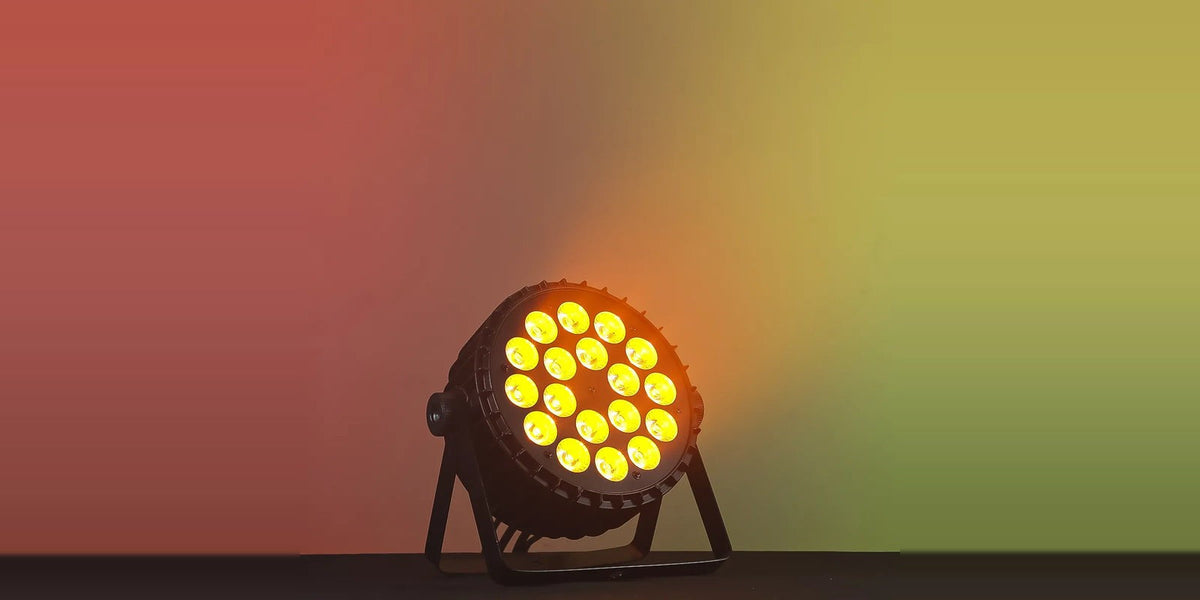
Quick answer: Uplighting means placing fixtures low along walls, columns, or drapes and aiming them upward to add color and depth. Plan the count from the length of the surfaces you want to light, the fixture's beam angle and output, and the desired spacing—not from guest count alone. A starting interval of about 8–10 feet can work for broad washes, but test the actual fixture in the venue. For indoor events, consider the Betopper LPC1818. For outdoor events, choose weather-suitable options such as the LPD001, LPW0918, or LPW0450 according to the venue and required coverage.

Betopper LPC1818 LED PAR, the indoor uplighting option in this guide.
Uplighting, PAR and Wash Lights: What the Terms Mean
These three words get used interchangeably, but they describe different things — and knowing the difference makes shopping easier.
| Term | What It Describes | Example |
|---|---|---|
| LED PAR | A fixture type: a compact, fixed-position LED light that throws a wash of color | Betopper LED PAR fixtures such as the LPC1818 |
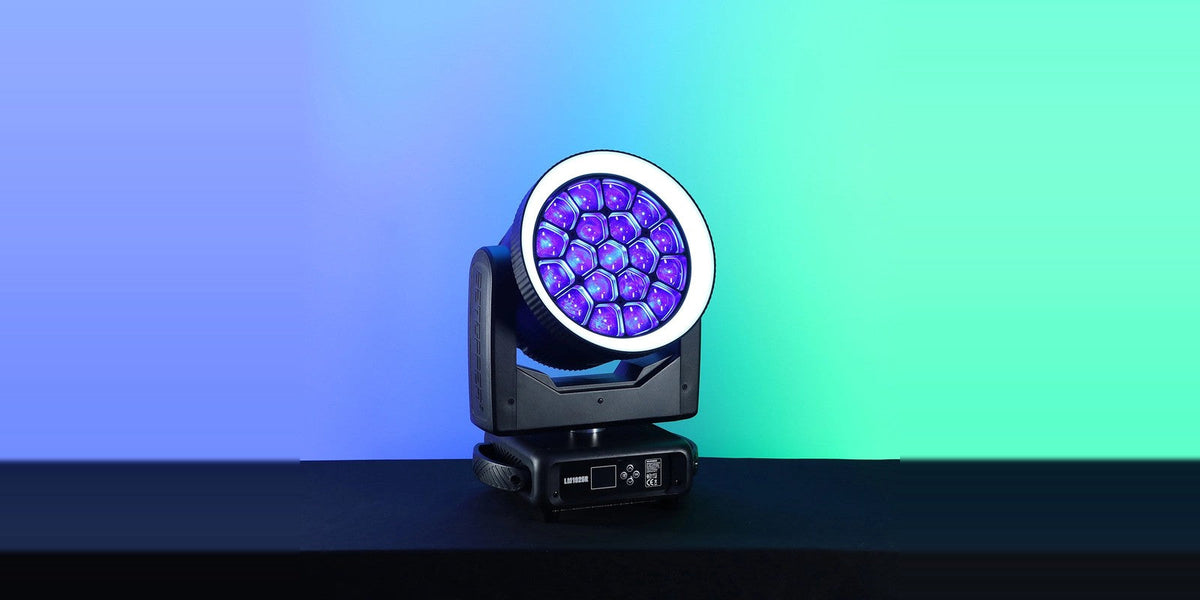
| Wash light | A function: any fixture that spreads soft, even light over an area rather than a hard beam | LED PAR fixtures, or a wash moving head like the Betopper LM0740 |
| Uplighting | A technique: placing fixtures on the floor and aiming them up a wall, column or drape | A row of LED PAR fixtures along a ballroom wall |
In short: most event uplighting is done with LED PAR fixtures used as wash lights.
How Many Uplights Do You Need?
| Room / Guest Count | Typical Fixture Count | Notes |
|---|---|---|
| Short feature wall or selected accents | Calculate from wall length | Focus on the head table wall and entrance |
| Main walls of a typical ballroom | Calculate from wall length | One fixture every 8–10 ft along the main walls |
| Long perimeter or multiple feature areas | Calculate from wall length | Add fixtures on columns, the bar and cake table |
| Tent or outdoor reception | 8–16 | Use LPD001, LPW0918, or LPW0450; confirm the current weather rating and site power plan |
Choose the uplight for the setting before calculating quantity. The LPC1818 is the recommended indoor option for ballrooms, halls, and other protected venues. For outdoor events, consider the LPD001, LPW0918, or LPW0450 and confirm the model's current weather rating, power arrangement, beam coverage, and installation requirements for the site. Calculate the final fixture count from wall length, spacing, surface color, and an on-site test.
Choosing Colors
- Match the palette, not the exact swatch. Uplighting reads lighter than fabric samples; pick a slightly deeper shade than the wedding color.
- Warm amber and soft white suit rustic, barn and garden venues. Blush, lavender and champagne suit classic ballrooms. Deep blues and purples suit evening and modern venues.
- Avoid green and deep red near dining areas — both make food and skin tones look off.
- Change the look through the night: softer during dinner, more saturated when the dance floor opens.
Placement Rules That Separate Pro Results From DIY
- Start by testing fixtures roughly 6–12 inches from the wall, then adjust for beam angle, lens, ceiling height, wall texture, and the desired spread. There is no single correct distance for every fixture and venue.
- Uplight architecture, not empty wall — columns, arches, drapes and alcoves.
- Never aim at guests' faces or into the head table.
- Hide cables behind drapes or under gaffer tape, and keep them out of walkways.
Wired or Battery-Powered?
Wired fixtures cost less per unit and run all night without charging, but need outlets and careful cable runs. Battery-powered wireless fixtures cost more but set up quickly and suit venues with few outlets, historic buildings, and tents. For indoor uplighting, consider the LPC1818. For outdoor use, compare the LPD001, LPW0918, and LPW0450, and verify the current weather rating and power requirements for the exact model before installation. Check betopperdj.com for current availability and specifications.

Betopper LPD001 battery-powered IP65 LED PAR uplight.

Betopper LPW0918 9×18W IP65 waterproof LED PAR light.

Betopper LPW0450 4×50W IP65 waterproof WW/CW COB PAR light.
Planning the whole reception, including dance-floor effects and DMX control? See The Wedding DJ's 3-Part Lighting Formula.
Frequently Asked Questions
How many uplights do I need for a wedding?
Measure the walls and features you intend to light. One fixture every 8–10 feet is a useful starting point for many broad washes, but the required count depends on the fixture, surface, ceiling height, and desired look; guest count alone is not a reliable sizing method.
Are LED PAR lights and uplights the same thing?
Uplighting is a technique; LED PAR fixtures are the tool most often used for it. A PAR placed on the floor and aimed up a wall becomes an uplight.
Can I control uplights from the DJ booth?
Yes. DMX-capable LED PAR fixtures can be linked to the same controller as your moving heads, so room color and dance-floor effects change together.
How quickly can Betopper ship before an event?
Betopper uses local warehouses where stock is available. Its published policy allows 1–2 business days for processing and says shipping usually takes about 3–10 business days after dispatch, with longer times possible by destination or when stock ships from China.
About BETOPPER — Betopper says it has worked in stage lighting since 2003, develops its products in-house, and operates an 18,000 m² factory. It publishes a two-year limited warranty and fulfills orders from local warehouses where stock is available. Published delivery guidance is 1–2 business days for processing plus about 3–10 business days after dispatch. Check the compliance documents for the exact model and destination market.

Leave a comment
This site is protected by hCaptcha and the hCaptcha Privacy Policy and Terms of Service apply.