


Introduction
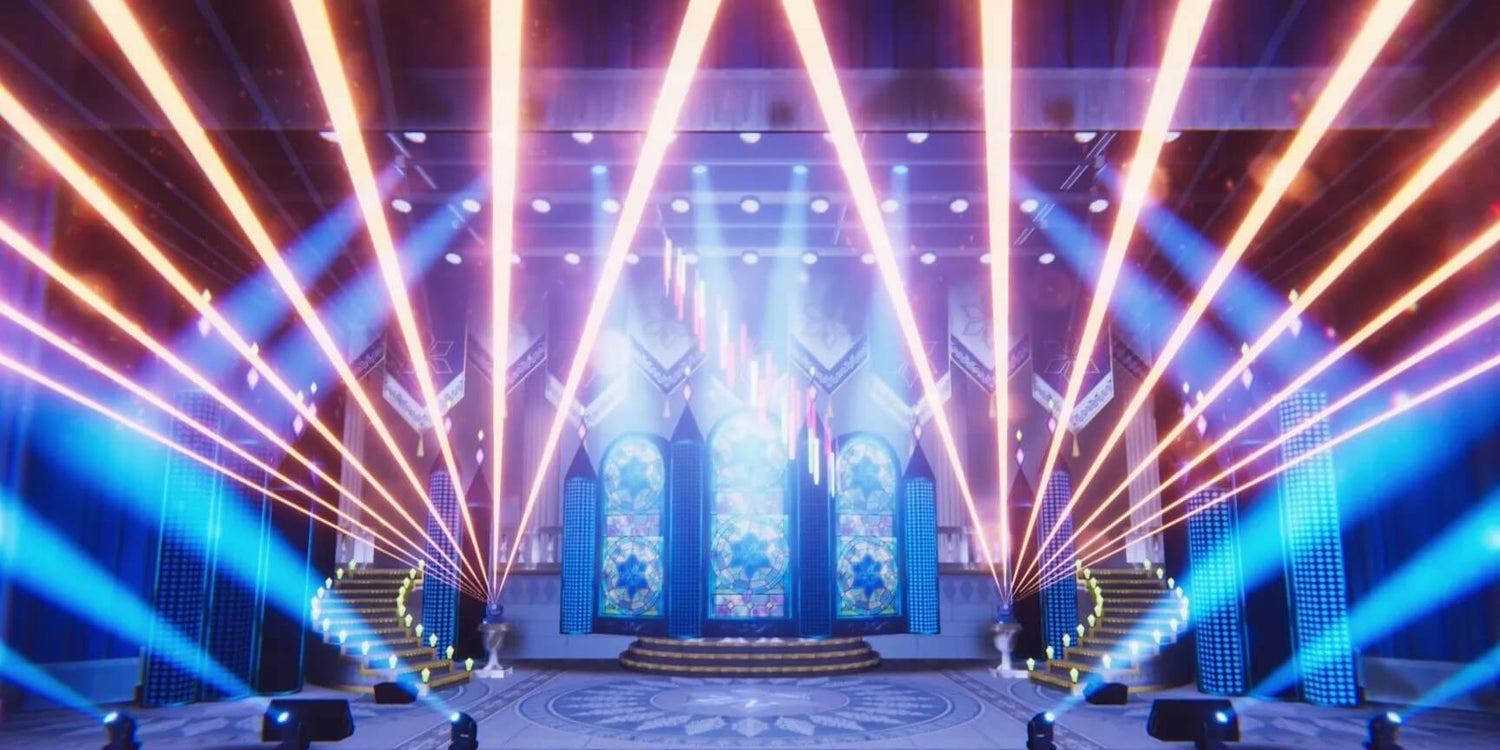
Most lighting demos and product videos are shot in controlled environments with a perfect layer of haze in the air. The result is spectacular: thick, sharp beams and dramatic aerial looks.
But real events rarely work like that.
Many venues—wedding halls, hotels, restaurants, corporate spaces, schools, churches—either limit or completely prohibit haze. Fire alarms, HVAC circulation, and venue policies all contribute to environments where beam effects simply don’t behave the way users expect.
At Betopper, we see one recurring challenge from customers worldwide:
“Why does my beam look amazing in videos but less visible at my event?”
This guide explains the real reason—and more importantly, how to design lighting professionally when atmospheric effects are not allowed.

Why Beams Look Different Without Haze — The Real Explanation
Here is the correct and customer-friendly version of the science:
A beam does not lose brightness without haze—it simply becomes hard to see from the side because clean air has very few particles for the light to reflect off.
Beams are visible only when the light scatters off tiny particles in the air.
That could be haze, fog, dust, mist, or smoke.
When a room is very clean:
- The beam is still full power
- The beam still reaches the surface brightly
- You just can’t see the “light in the air”
This isn’t a problem with the fixture.
It’s how all beam lights behave in particle-free environments—regardless of brand or wattage.
Simple rule:
With haze, you see a light beam.
Without haze, you see only the spot the beam lands on.
Aerial visibility is not brightness; it’s atmosphere.
The Design Shift: From “Air Effects” to “Space Lighting”
When haze is available, beam fixtures create the iconic mid-air looks DJs are familiar with.
When haze is NOT available, beam lighting becomes architectural rather than atmospheric.
That means:
With haze
- Beams cut through the room
- Movement builds energy
- Aerial lines define the space
Without haze
- Surfaces become the canvas
- Light shapes the environment
- Movement must be subtle and intentional
In haze-free venues, professional LDs do not try to force aerial effects.
They redesign the lighting approach to fit the room.
How to Use Beam Fixtures Professionally Without Haze
Beam lights remain powerful tools even when haze is prohibited—they just need to be used differently.
A. Aim beams upward to define height
Even without haze, beams create elegant architectural lines on ceilings and rafters.
B. Use gobos to add texture
When mid-air visibility disappears, textured surfaces become your visual interest.
C. Use diagonal angles to shape the room
Diagonal beams visually expand the space and create dynamic geometry.
D. Use beams as accents—not the main layer
Without haze, beams are most effective for moment-based highlights, transitions, and slow scenic sweeps.
E. Use beams to light scenery and décor
Christmas trees, draping, walls, and backdrops respond beautifully to beam highlights.
This is how beam lights stay relevant in haze-restricted venues.
The Importance of Wash, Spot, and Static Lighting Increases Significantly
When haze is not allowed, the foundation of lighting design shifts toward layers that remain fully visible at all times.
Wash Lighting — The Core of Any Haze-Free Environment
Wash fixtures define:
- overall color tone
- ambience
- camera exposure
- audience comfort
In weddings, corporate events, banquets, and winter décor, the wash layer becomes the most essential tool.
A flexible zoom wash like the Betopper LM1915R 19x15w Wash Moving Head with Halo Ring or the Betopper LM0740 7x40w RGBW Wash Moving Head is typically the anchor of haze-free setups because of its ability to create wide, soft, blended fields of color that look natural to both the eye and the camera.
Spot Lighting — Creating Texture When Beams Lose Their Air Effect
When beams can no longer produce visible mid-air lines, spots become even more valuable.
Spots excel at:
- scenic texture
- rotating gobos
- backdrop projections
- floor patterns
A spot or hybrid fixture capable of clean gobo projection—such as the Betopper BSW200 200w Spot Beam Wash Hybrid Moving Head Light—can create depth and visual interest without relying on atmospheric particles.
In haze-restricted venues, texture replaces the aerial beam effect.
Static & High-CRI Lighting — Essential for Photography and Video
Most haze-free environments involve heavy photography:
- Christmas parties
- weddings
- corporate events
- school performances
High-CRI static fixtures provide natural skin tones and clean exposure—something beam fixtures cannot achieve in these conditions.
A high-CRI PAR such as the Betopper LPC010-B 54x4w 5562lm PAR Light with Barndoor gives consistent, flattering front-fill that dramatically improves portraits, video recording, and livestreaming.
Venue-Based Lighting Strategies When Fog Machines Aren’t Allowed
Different venues react to lighting in different ways — here’s how to adapt your design.
1. Weddings
Most wedding venues do not allow haze because of fire alarms and guest comfort.
To get a clean, elegant look:
- Use warm, soft wash lighting as the main layer
- Add gentle textures from spot gobos to enhance walls or décor
- Use beams only as subtle accents (not high-intensity effects)
Goal: romantic, flattering, photo-friendly lighting.
2. Corporate Events
Companies prefer a clean, professional atmosphere.
- Gobos and textured projections work better than aerial beams
- Neutral color palettes (white, amber, blue) are preferred
- Avoid fast movement or harsh strobes
Goal: polished lighting that supports speeches, branding, and photography.
3. Ballrooms & Hotels
These locations often have very sensitive fire detection systems, so haze is almost always banned.
- Rely on architectural lighting: uplights, wall texture, ceiling projection
- Wide, even wash coverage keeps the room bright
- Use spot gobos for elegant patterns during entrances and slow moments
Goal: upscale, decorative lighting that enhances the room.
4. Schools & Churches
These venues nearly always prohibit haze for safety reasons.
- Wash lighting becomes essential for visibility and ambience
- Spot fixtures help create patterns and stage focus
- Avoid strong beams — they won’t be visible without haze
Goal: clean illumination for performances, rehearsals, and ceremonies.
5. Small Bars & Restaurants
Even when haze is allowed, airflow often removes it immediately.
- Treat beams as décor, not aerial effects
- Use FX bars or gobos to create movement on walls and ceilings
- Keep brightness lower to avoid overwhelming the space
Goal: atmosphere first, effects second.
Summary
Every venue type requires a different lighting approach when haze isn’t available.
The more restrictive the space, the more you’ll rely on wash, spot, texture, and architectural lighting — instead of visible mid-air beams.
FAQ: Haze, Beam Visibility & Venue Restrictions
1. Why do my beams look “weak” when there’s no haze?
Because haze particles scatter and reveal the light path. Without them, the beam is still bright — you simply don’t see it in the air. This is normal and not a fixture defect.
2. Is haze the same as fog?
No. Fog is dense and sits low; haze is fine and uniform. Most venues ban fog because of fire alarms, but many allow controlled haze depending on the system.
3. My venue doesn’t allow haze. Can I still use beam fixtures?
Yes — but use them architecturally, not atmospherically. Techniques include:
• floor or ceiling projections
• gobo texture
• slow movement
• accenting reflective décor (winter events, metallic surfaces)
4. Will wash lights look better than beams without haze?
For ambience and camera work — yes. Wash fixtures become the primary layer in haze-free spaces because they define color, mood, and exposure.
5. Why do photos and videos look different without haze?
Without atmospheric scatter, contrast increases and beams don’t appear in mid-air. Cameras respond strongly to direct hotspots, making exposure more challenging.
6. Can strobes or FX lights still be effective without haze?
Yes, but use them sparingly. Without haze, strobes become more directionally intense. Slow pulses and low-intensity modes often look better for corporate and holiday events.
7. What’s the best lighting strategy for haze-restricted venues?
• Rely on wash as your foundation
• Add texture using spot gobos
• Use high-CRI static light for photography
• Treat beams as accents, not the main effect
Conclusion — Design for Reality, Not for Demo Rooms
Haze-free lighting is not a limitation—it’s a different design discipline.
The most successful lighting professionals adapt their approach based on:
- atmosphere
- airflow
- venue rules
- photography needs
- event style
At Betopper, our goal is to help creators, DJs, venues, and production teams achieve beautiful results in the real-world environments where lighting is actually used—not just where it is demonstrated.
Whether you’re building a holiday rig, a wedding setup, a corporate design, or a mobile DJ system, understanding how lights behave with and without haze is the key to professional results.
Explore lighting tools and expert guides designed for real venues:

Leave a comment
This site is protected by hCaptcha and the hCaptcha Privacy Policy and Terms of Service apply.